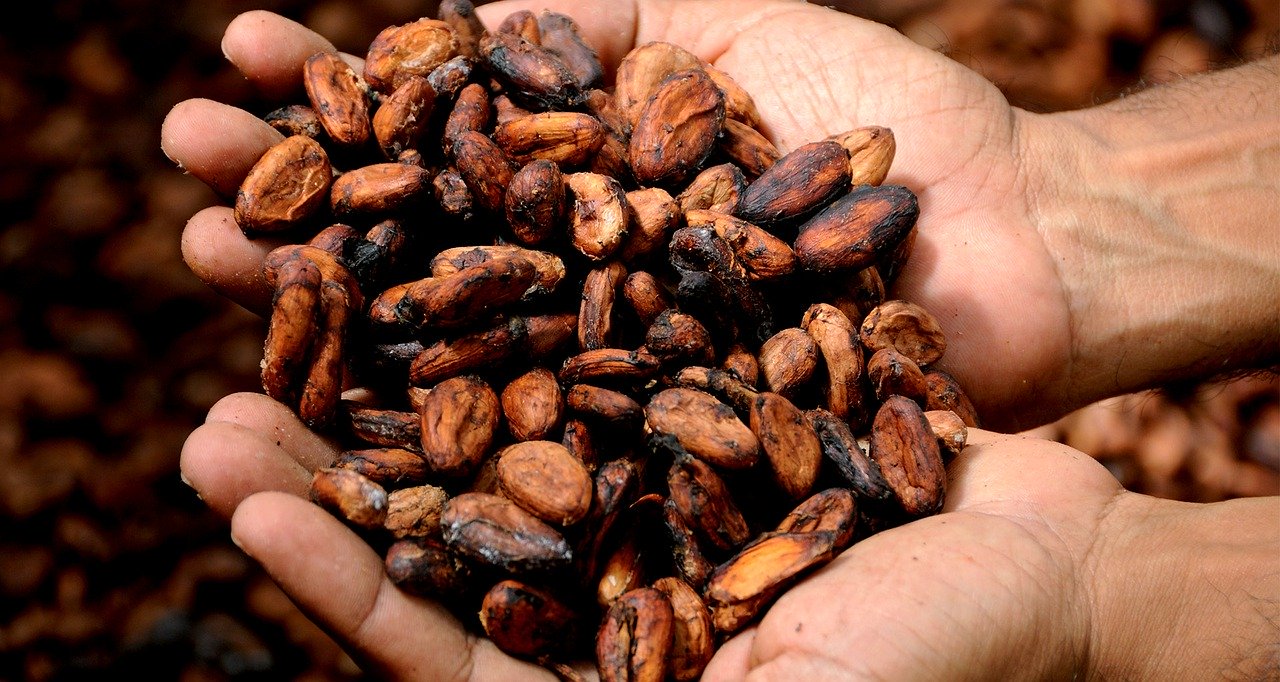
So History has shown us that Christopher Columbus wasn't quite exactly the great guy we thought him to be. But he did help in making chocolate as we know it today.
If it weren't for explorers like Columbus, Cortes, and missionaries like Jose de Acosta, we would all be grinding our beans and frothing it into a bitter, spicy drink, and not into the delicious, melt in your mouth delight it is today.
Columbus brought cacao beans back to Spain, but it didn't gain traction until Spanish friars introduced it to the royal courts, where it quickly became a favorite. It was still consumed as a drink, but sugar and honey was added to it to combat the bitterness.
(It is rumored that the word cacao is derived from the Spanish word "caca" or poo. And if you ever have eaten unsweetened, high cacao percentage chocolate, you can probably identify with these early chocolate consumers.)
Vanilla was added and other spices which sometimes gave the illusion of a more potent vanilla flavor. It became known that chocolate without the vanilla was called "healthy chocolate."
Jose de Acosta, a Spanish Jesuit who lived in Mexico and Peru in the late 16th century, wrote of the medicinal qualities of the chocolate drink with chili. "... they say is good for the stomach and against catarrh." Catarrh is a medical condition involving excess mucus in the sinuses and throat. And recently it was found that chocolate can help with sore throats.
So Chocolate was gaining popularity across Europe in the 1600's. So popular that in 1662, Pope Alexander VII declared that religious fasts were NOT broken by consuming chocolate drinks.
You hear that, the church wants you to consume chocolate!
So here is where we come to our first controversy!
Chocolate had become so popular, and the demand so great, it brought with it a massive slave market as Cacao plantations began to crop up all over. And with all the conquering Europeans coming over to the Americas, they brought with them diseases which wiped out the Mesoamerican workers. So the production of chocolate fell on African slaves, and low-wage workers.
The industrial revolution brought on quicker ways to produce chocolate (a process that will be discussed in a future blog). It began with Dutch chemist Coenraad van Houten, who introduced alkaline salts to reduce the bitterness, and then he created a press to separate the cacao butter from the the liquor. This made the chocolate cheaper to produce and kept the product consistent. This is known as "Dutch Cocoa."
In 1847, Joseph Fry discovered a way to make chocolate moldable, and began launching chocolate bars.
Then in 1875, Daniel Peter added powdered milk (produced by Henri Nestle) to the chocolate liquor, and invented Milk Chocolate.
Finally, in 1879, Rudolphe Lindt invented the conching machine which further improved the texture and taste of chocolate.
Cadbury began manufacturing boxed chocolates in England by 1868, and created the first Easter egg in 1875, by developing a pure cocoa butter, which produced smooth shapes.
Chocolate came to the United States in 1765, when James Baker and John Hannon founded the Baker Chocolate Company, using the cocoa beans they brought back from the West Indies.
In 1893, Milton Hershey began his career with chocolate coated caramels... and that is another fight we will save for another blog, my sweet Barn Animals.
What do you want to know more of? Leave a comment!
Musings, Information, and Fun Tidbits about Chocolate, Tea, and everything in-between.
Showing posts with label history of chocolate. Show all posts
Monday, March 9, 2020
Monday, March 2, 2020
All hail Quetzalcoatl: The god of chocolate
If you ever needed a reason to worship chocolate, here is your idol.
Quetzalcoatl was an Aztec god. He is the feathered serpent god of wind. He can bring on whirlpools and whirlwinds, which makes sense if you've ever watched chocolate melt in a tempering machine.
He was cast away by the other gods, because Quetzalcoatl shared the secrets of chocolate to us lowly humans.
Now the details of this transfer of information is fuzzy. But I imagine Quetzalcoatl was being tributed to by the Aztecs, who were giving him sacrifices of vestal virgins and corn (or as they called it maize), and he probably was getting tired of this routine. Everywhere he goes, sacrificed virgins and maize. So he then thinks, all this would be better with a little cacao.
We could not be more thankful for the knowledge passed down from this god.
So the Aztecs took to this news and stopped sacrificing virgins and replaced drinking their blood, by drinking a frothed chocolate drink and would add achiote to make it more red. Achiote is a natural dye and is used today to make butter yellow and cheddar cheese orange.
So the Aztecs began cultivating the Cacao bean, and used it for more than just drinks. They used it for money as well. In fact an avocado was worth three beans. Unfortunately, I don't know if my creditors would take chocolate beans for my debts though.
So this is how the Mayans were able to get cacao beans, as they couldn't grow cacao trees in their native land, but they ruled over many Aztec lands, and thus would demand cacao seeds for taxes.
The Mayans drank their chocolate hot, while the Aztecs as mentioned before liked it cold. The Aztecs would also season their drink with with chiles, allspice, vanilla and honey.
In Mexico, archeological digs have found residues in vessels showing that they used not only the bean, but the white pulp around the bean which is a source of fermentable sugars to make alcoholic drinks. Nothing like a Pre-Columbian Cocktail.
So I hope that the next time you enjoy a decadent truffle or sip a frothy cup of cacao, I hope you say a little thanks to the god who brought it to us.
All Hail Quetzalcoatl!
Next on the blog, we will continue with how cacao turned into chocolate.
Quetzalcoatl was an Aztec god. He is the feathered serpent god of wind. He can bring on whirlpools and whirlwinds, which makes sense if you've ever watched chocolate melt in a tempering machine.
He was cast away by the other gods, because Quetzalcoatl shared the secrets of chocolate to us lowly humans.
Now the details of this transfer of information is fuzzy. But I imagine Quetzalcoatl was being tributed to by the Aztecs, who were giving him sacrifices of vestal virgins and corn (or as they called it maize), and he probably was getting tired of this routine. Everywhere he goes, sacrificed virgins and maize. So he then thinks, all this would be better with a little cacao.
We could not be more thankful for the knowledge passed down from this god.
So the Aztecs took to this news and stopped sacrificing virgins and replaced drinking their blood, by drinking a frothed chocolate drink and would add achiote to make it more red. Achiote is a natural dye and is used today to make butter yellow and cheddar cheese orange.
So the Aztecs began cultivating the Cacao bean, and used it for more than just drinks. They used it for money as well. In fact an avocado was worth three beans. Unfortunately, I don't know if my creditors would take chocolate beans for my debts though.
So this is how the Mayans were able to get cacao beans, as they couldn't grow cacao trees in their native land, but they ruled over many Aztec lands, and thus would demand cacao seeds for taxes.
The Mayans drank their chocolate hot, while the Aztecs as mentioned before liked it cold. The Aztecs would also season their drink with with chiles, allspice, vanilla and honey.
In Mexico, archeological digs have found residues in vessels showing that they used not only the bean, but the white pulp around the bean which is a source of fermentable sugars to make alcoholic drinks. Nothing like a Pre-Columbian Cocktail.
So I hope that the next time you enjoy a decadent truffle or sip a frothy cup of cacao, I hope you say a little thanks to the god who brought it to us.
All Hail Quetzalcoatl!
Next on the blog, we will continue with how cacao turned into chocolate.
Subscribe to:
Posts (Atom)